Local and Indigenous Seed Stewardship: Empowering Farmers as Custodians of Our Food Future
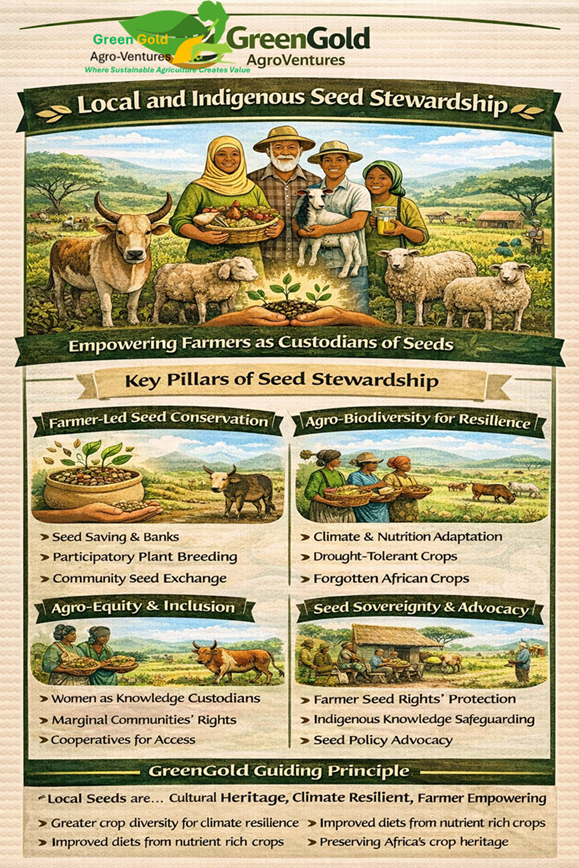
At GreenGold AgroVentures, we believe that the future of African agriculture is deeply rooted in its past. Long before formal seed systems existed, African farmers were already scientists, breeders, and conservationists—selecting, saving, exchanging, and improving seeds adapted to their landscapes, cultures, and climates.
Today, as climate change, biodiversity loss, and fragile food systems threaten rural livelihoods, local and indigenous seed stewardship is no longer a nostalgic idea—it is a strategic imperative.
Farmers at the Heart of Seed Stewardship
Seed stewardship starts with recognizing farmers not as passive recipients of improved varieties, but as custodians of living genetic resources. Across Africa, smallholder farmers continue to conserve and enhance seeds that are drought-tolerant, disease-resilient, nutritious, and culturally meaningful.
By empowering farmers to lead seed conservation and innovation, we strengthen local food systems, reduce dependency on external inputs, and restore control over what is grown, eaten, and exchanged.
Key Pillars of Seed Stewardship
1. Farmer-Led Seed Conservation
Local seed saving and community seed banks ensure that valuable crop diversity is not lost. Through participatory plant breeding, farmers actively select varieties that perform best under real field conditions—rather than laboratory ideals. Community seed exchanges further strengthen resilience by spreading risk and knowledge across landscapes.
2. Agro-Biodiversity for Climate Resilience
Agro-biodiversity is Africa’s natural insurance policy. Indigenous and neglected crops—often overlooked by commercial markets—are uniquely adapted to climate stress, poor soils, and variable rainfall. These crops support climate adaptation, improve household nutrition, and reduce vulnerability to shocks.
3. Agro-Equity and Inclusion
Women and marginalized communities are the backbone of seed knowledge. As primary seed keepers, processors, and food custodians, women play a central role in conserving crop diversity. Inclusive seed systems recognize and protect these contributions while strengthening cooperatives that improve access to seeds, markets, and services.
4. Seed Sovereignty and Advocacy
Seed sovereignty is about rights, dignity, and self-determination. Farmers must have the right to save, use, exchange, and sell their seeds. Protecting indigenous knowledge, advocating for fair seed policies, and aligning national frameworks with farmers’ realities are essential to building just and sustainable seed systems.
Why Local Seeds Matter
Local and indigenous seeds are far more than planting material. They are:
- Cultural heritage, carrying stories, identities, and traditions
- Climate-resilient assets, shaped by generations of adaptation
- Nutrition solutions, rich in diversity and micronutrients
- Economic enablers, reducing dependency and strengthening local value chains
Greater crop diversity enhances climate resilience. Nutrient-rich traditional crops improve diets. Conserving indigenous seeds safeguards Africa’s agricultural heritage for future generations.
GreenGold’s Guiding Principle
At GreenGold AgroVentures, our guiding principle is simple:
Local seeds are a public good—farmer-empowering, climate-resilient, and central to sustainable food systems.
By investing in farmer-led seed stewardship, we are not only preserving biodiversity—we are cultivating resilience, equity, and sovereignty across African agriculture.
The future of food will not be imported.
It will be grown, saved, and stewarded—by farmers.
Related Posts
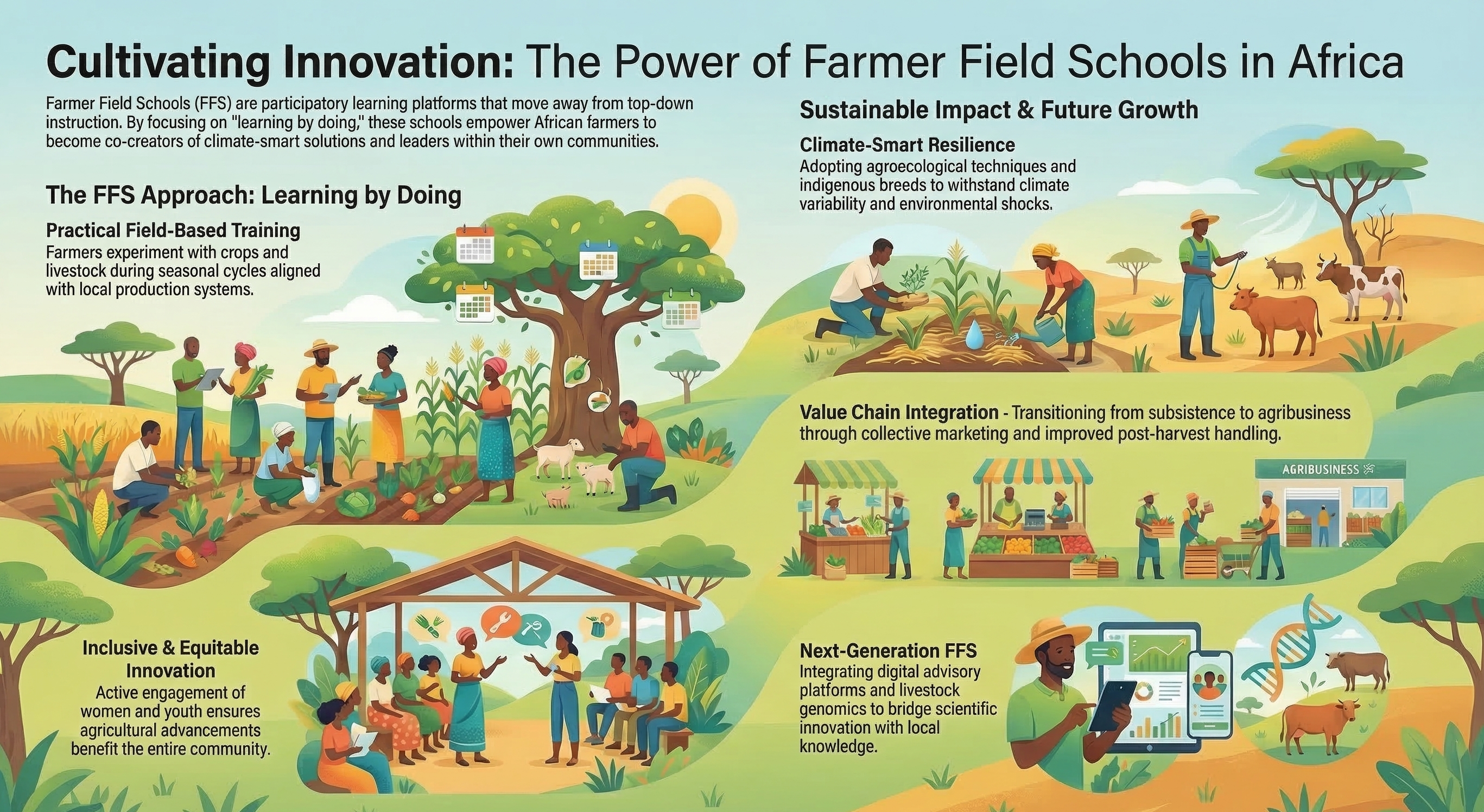
Celebrating Farmer Field Schools (FFS) across Africa
At GreenGold AgroVentures, March (The planting Month) is a time to spotlight one of the most transfo...
Read More →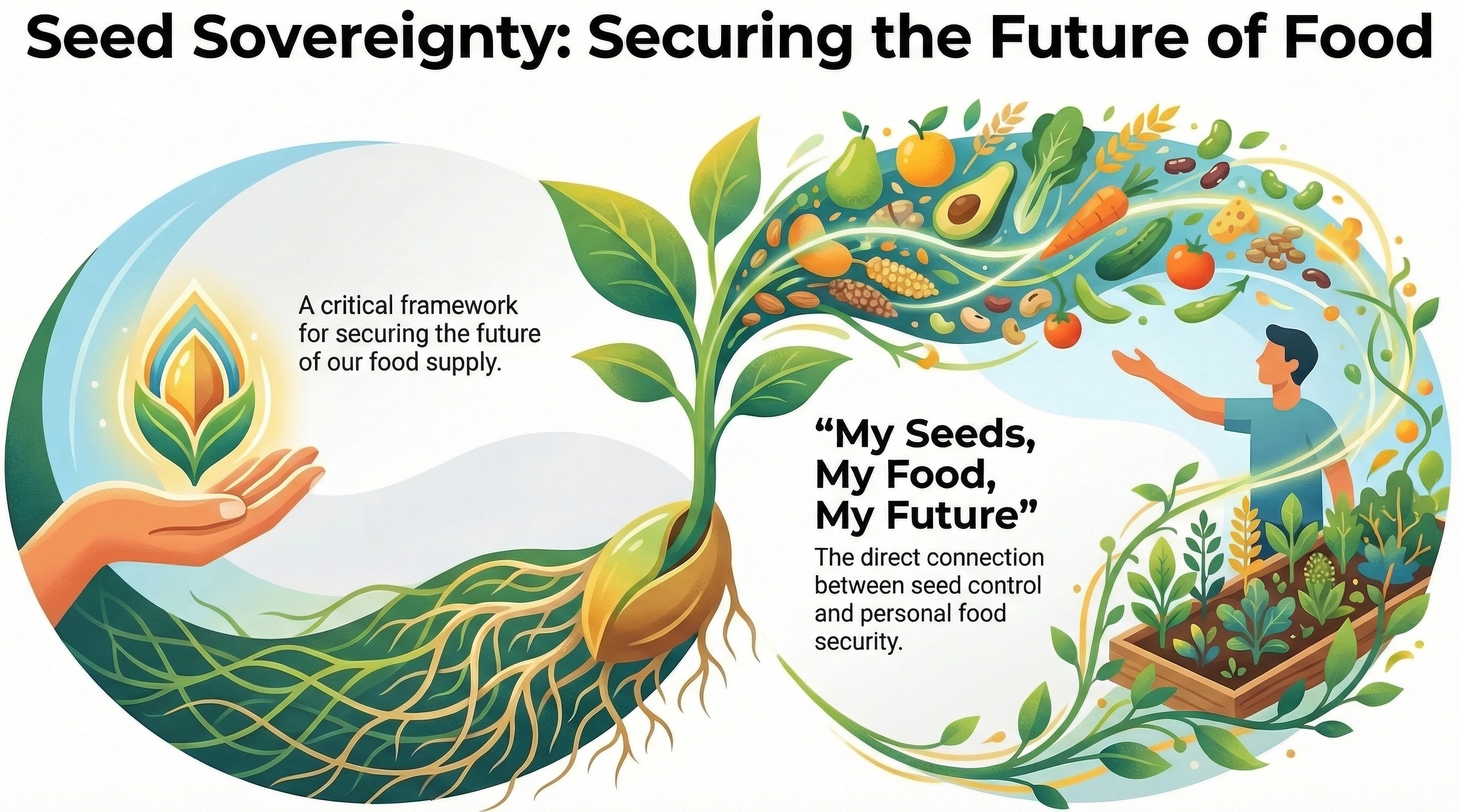
MY SEEDS, MY FOOD, MY FUTURE - Reclaiming the Foundations of Food Systems in Africa
At GreenGold AgroVenture, we believe that the future of food begins with the seed. The simple yet po...
Read More →