Celebrating Farmer Field Schools (FFS) across Africa
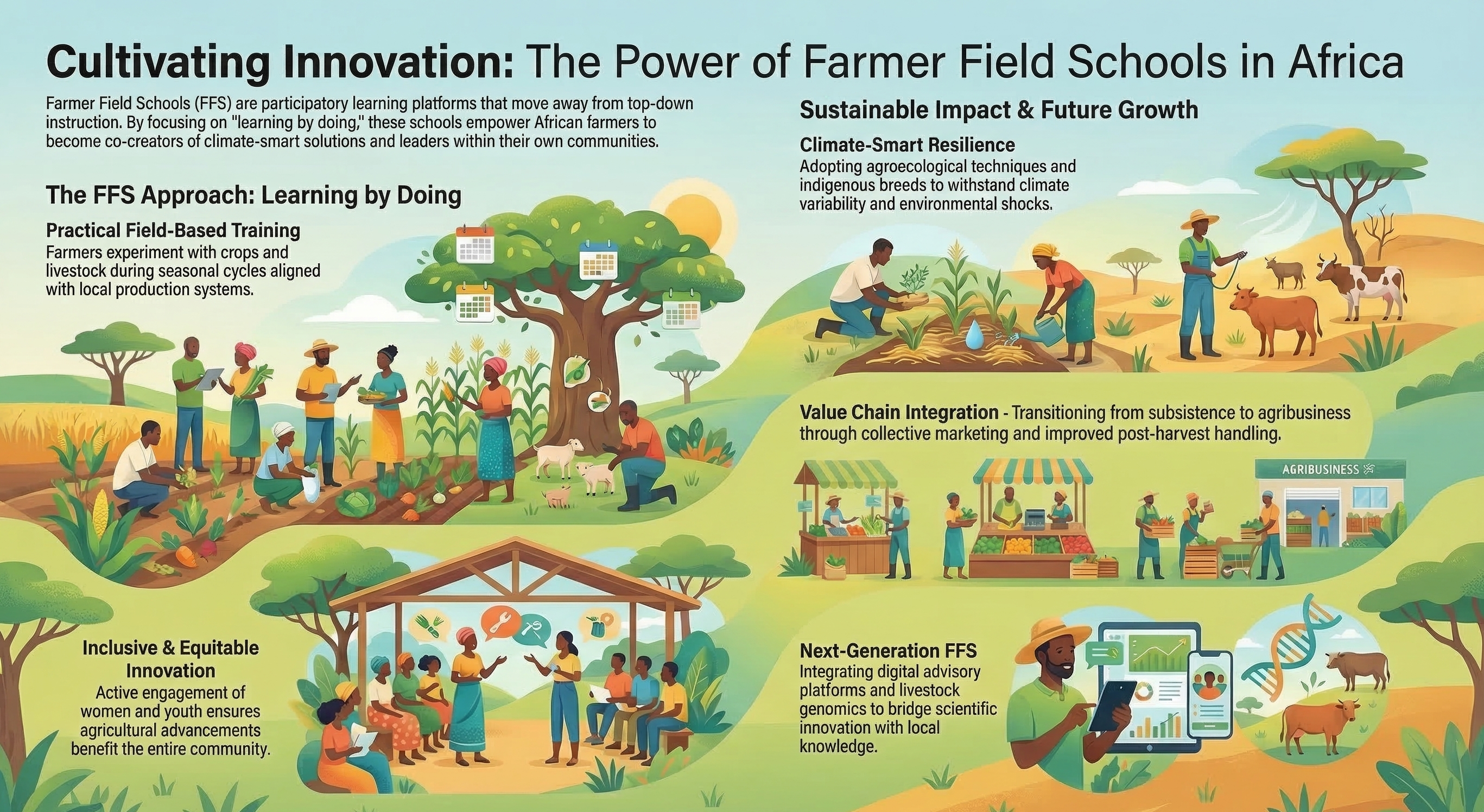
At GreenGold AgroVentures, March (The planting Month) is a time to spotlight one of the most transformative approaches to agricultural development in Africa, Farmer Field Schools (FFS). At GreenGold AgroVentures, we recognize FFS not just as a training model, but as a movement that empowers farmers to become innovators, educators, and leaders within their communities —driving sustainable change from the ground up.
🌾 WHAT ARE FARMER FIELD SCHOOLS?
Farmer Field Schools (FFS) are participatory, community-based learning platforms that place farmers at the center of agricultural innovation. Rather than being passive recipients of instruction, farmers actively experiment, observe, and analyze real-life farming scenarios. In FFS, learning happens on the farm, where practical challenges meet scientific principles, creating an environment where knowledge is co-created and applied immediately. FFS are designed to empower farmers with critical thinking skills, adaptive management techniques, and confidence to make decisions that are context-specific. This approach ensures that solutions are not just theoretically sound, but practically relevant, locally adapted, and sustainable over the long term. By embracing this methodology, FFS transform communities into knowledge hubs, where innovation spreads organically through peer-to-peer learning.
HOW FARMER FIELD SCHOOLS WORK
👩🏾🌾 Learning by Doing
At the heart of FFS is the philosophy of “learning by doing.” Farmers engage in hands-on activities that mirror the realities of their fields, including experimentation with crops, livestock, and integrated farm management techniques. Each FFS cycle is tied to the seasonal rhythms of local agriculture, allowing farmers to observe the outcomes of their decisions in real time. This active, field-based learning strengthens problem-solving abilities, as farmers learn to interpret results, adjust practices, and optimize production based on evidence rather than guesswork. Over time, this fosters self-reliance and adaptability, crucial traits for navigating the unpredictability of African farming systems shaped by climate variability, soil fertility challenges, and pest pressures. By the end of a cycle, farmers are no longer just learners—they become co-creators of knowledge, capable of experimenting with innovations and sharing insights with peers across their communities.
⚖️ Agro-Equity & Inclusion: Leaving No Farmer Behind
A key pillar of FFS is its unwavering commitment to equity, inclusion, and shared opportunity. Agricultural development often overlooks marginalized groups, but FFS actively engage women, youth, and disadvantaged farmers in learning, experimentation, and decision-making. By ensuring equal access to quality seeds, improved livestock breeds, and digital advisory tools, FFS break barriers that prevent vulnerable groups from benefiting fully from agricultural advancements. Beyond technology, FFS foster social cohesion, encouraging collective action, knowledge exchange, and mutual support among community members. Through inclusive participation, FFS build stronger, more resilient communities where every farmer has a voice, a role, and the resources to thrive.
🌍 Promoting Sustainable and Resilient Practices
FFS are powerful engines for climate-smart, environmentally sustainable agriculture. Participants learn to implement practices that improve soil health, conserve water, and preserve biodiversity. This includes adopting agroecological approaches, integrating crop-livestock systems, and conserving locally adapted and indigenous livestock breeds, which are crucial for maintaining genetic diversity and resilience. These techniques are especially vital in Africa’s Arid and Semi-Arid Lands (ASALs), where farmers face extreme weather events, prolonged droughts, and degraded soils. By equipping farmers with sustainable tools and knowledge, FFS help communities adapt to climate variability, safeguard natural resources, and enhance long-term food security.
🔗 Value Chain Integration
Farmer Field Schools go beyond production—they link farmers to markets, value addition, and economic opportunity. Through training in post-harvest handling, processing, and collective marketing, farmers increase product quality, reduce losses, and improve profitability. FFS also strengthen cooperative models, enabling farmers to access regional markets, negotiate better prices, and participate actively in the broader agricultural value chain. By bridging the gap between production and market engagement, FFS support the transition from subsistence farming to market-oriented agribusiness, creating pathways for sustainable income growth and rural development.
KEY BENEFITS & OUTCOMES
The impact of FFS is both tangible and transformative. Participating communities consistently report:
- Higher Productivity & Resilience: Farmers increase yields while effectively managing environmental risks.
- Stronger Networks & Knowledge Sharing: Communities develop durable learning systems that amplify innovation.
- Equitable Access to Resources: Women, youth, and marginalized farmers gain meaningful participation in agricultural advancement.
- Economic Empowerment: Farmers evolve from subsistence producers into agripreneurs, taking an active role in markets and value chains.
These outcomes underscore the holistic value of FFS, positioning them as catalysts for sustainable agricultural transformation across Africa.
WHY FFS MATTERS FOR AFRICA
Across Africa, smallholder farmers face complex and interrelated challenges, from climate change and land degradation to limited access to quality inputs, knowledge, and markets. Farmer Field Schools (FFS) offer a scalable and locally adaptable solution that addresses these challenges in a holistic and sustainable way. They:
- Strengthen agricultural resilience by equipping farmers with adaptive, climate-smart practices
- Enhance food and nutrition security through improved productivity and diversified farming systems
- Preserve livestock and crop biodiversity, including indigenous breeds and varieties vital for future resilience
- Build rural economies and livelihoods by enabling farmers to participate more effectively in value chains
By empowering farmers with knowledge, skills, and collective agency, FFS play a critical role in shaping a more resilient, inclusive, and food-secure Africa.
GREENGOLD AGROVENTURES COMMITMENT
At GreenGold AgroVentures, we view Farmer Field Schools (FFS) not just as training programs, but as catalysts for sustainable, inclusive, and market-driven agriculture across Africa. Through our FFS approach, we aim to:
- Scale agroecological intensification to increase productivity while preserving ecosystems
- Integrate livestock and crop systems for optimized farm efficiency and resilience
- Build farmer capacity in digital tools, climate-smart practices, and innovative technologies
- Strengthen cooperative models and ensure structured access to local and regional markets
For GreenGold AgroVentures, the goal is not merely to replicate traditional FFS models, but to design the next generation FFS that:
- Leverages livestock genomics and breeding innovations to enhance productivity and conserve genetic diversity
- Integrates digital advisory platforms for real-time decision support and farm management
- Implements climate-smart and agroecological practices for resilient, sustainable production
- Connects farmers to structured market and value chain opportunities, ensuring profitability and economic sustainability
This approach positions FFS as a dynamic platform, bridging science, technology, and local knowledge to empower farmers as agents of innovation and growth. Farmer Field Schools remind us that the most powerful solutions already reside within farming communities. By investing in knowledge, collaboration, and innovation, we unlock the full potential of Africa’s agriculture.
Farmers are not just beneficiaries, they are the architects of resilient, inclusive, and thriving food systems.
Related Posts
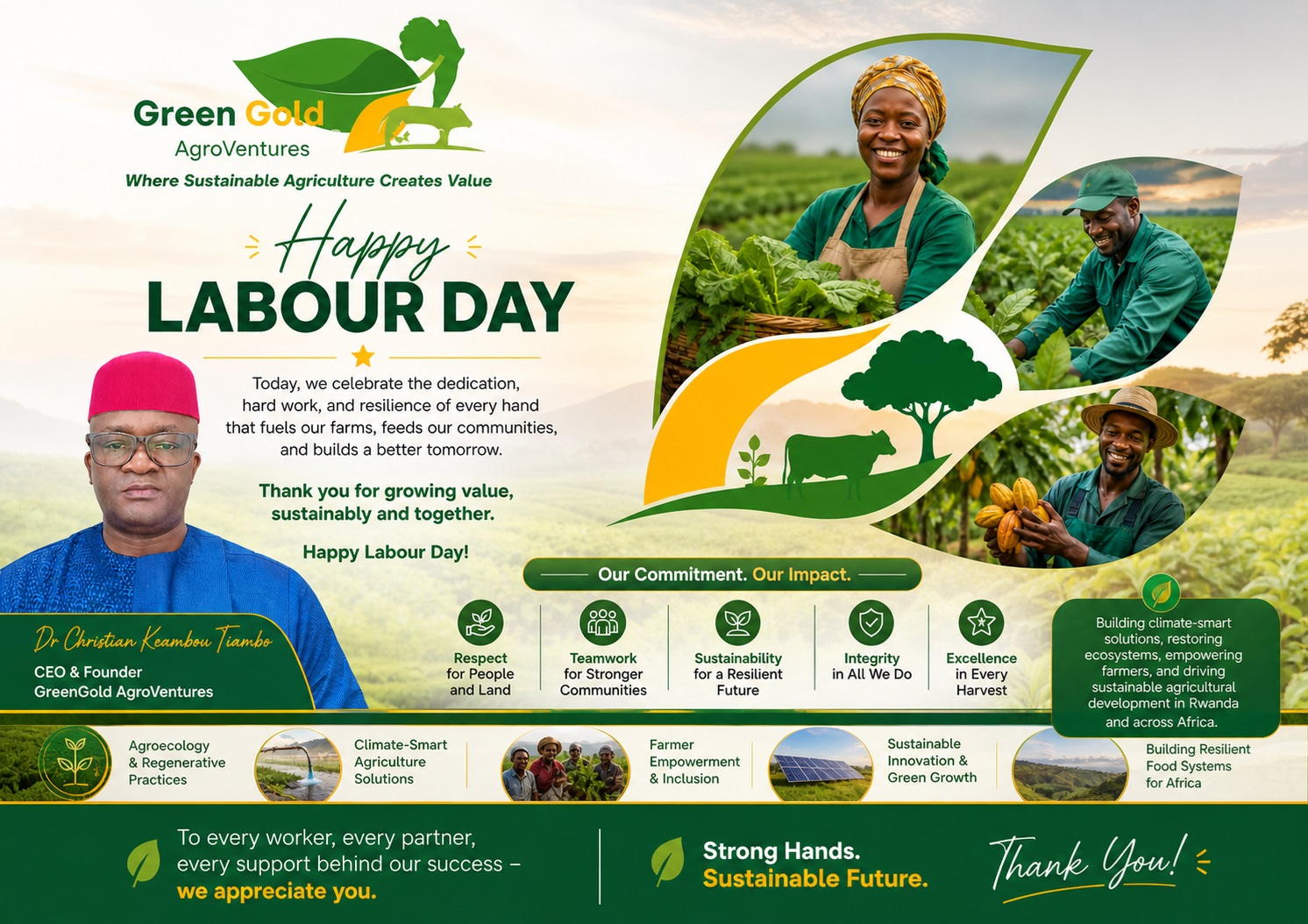
Happy Labour day 2026
Today, we proudly celebrate the dedication, resilience, and tireless efforts of our farmers, partner...
Read More →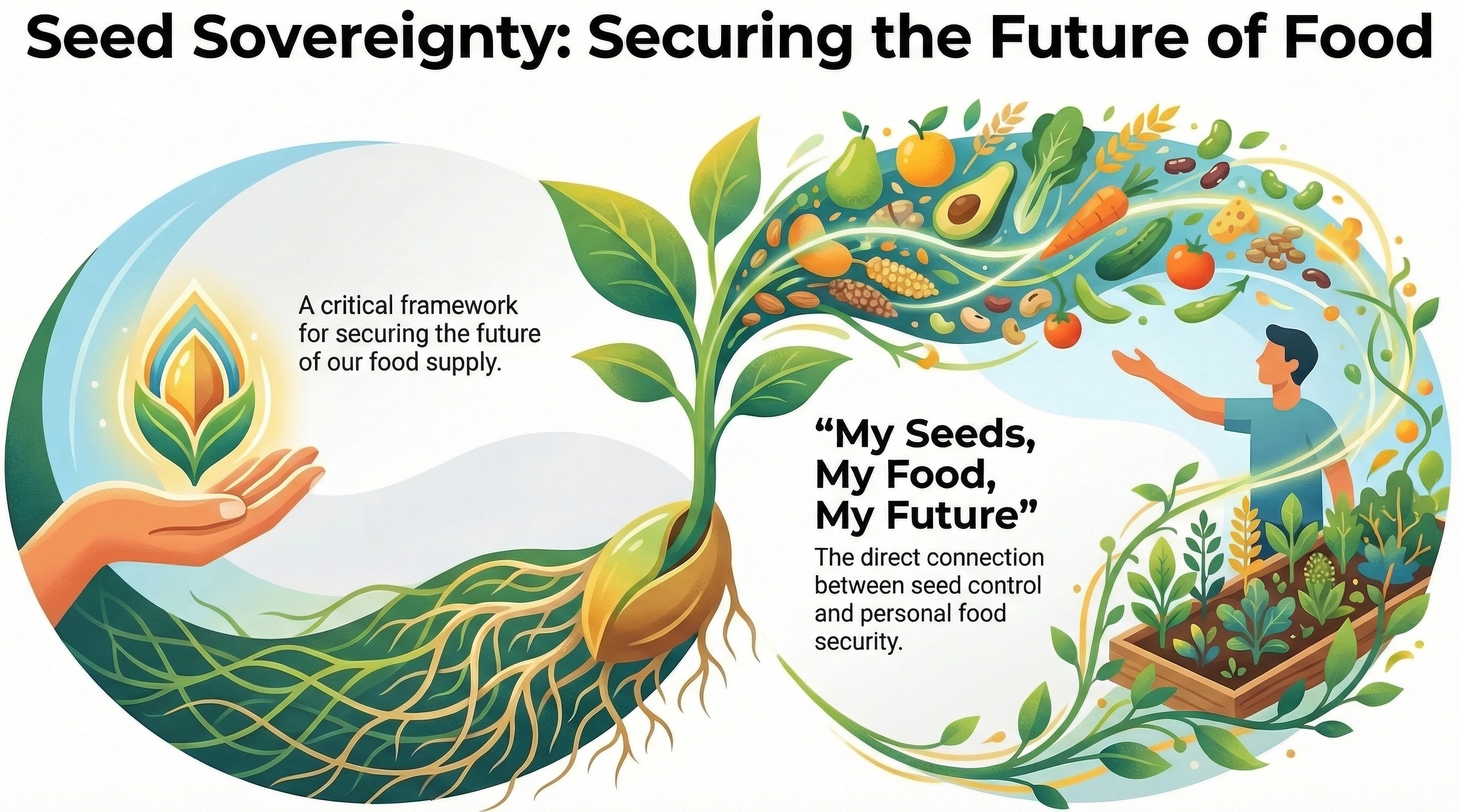
MY SEEDS, MY FOOD, MY FUTURE - Reclaiming the Foundations of Food Systems in Africa
At GreenGold AgroVenture, we believe that the future of food begins with the seed. The simple yet po...
Read More →